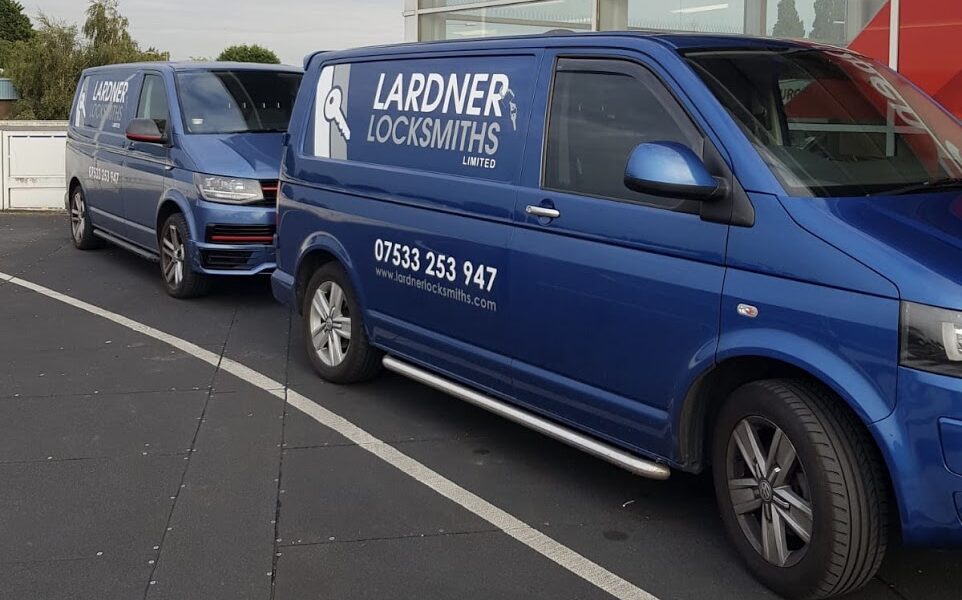
Running a business in Croydon comes with enough challenges without having to worry about security. Whether you operate a retail shop on a busy high street, manage an office space, or run a warehouse unit on an industrial estate, protecting your premises should always be a priority. Unfortunately, security is often something business owners only seriously think about after an incident has already occurred.
At Lardner Locksmiths, we regularly work with local businesses who believed their security was adequate, only to discover weaknesses after a break-in attempt, lost keys, or internal access issues. The reality is that commercial security needs ongoing attention. Locks wear down, staff change, and crime patterns evolve. If you have not reviewed your security in recent years, it is worth asking yourself a simple but important question: is your business properly protected?
The Reality of Commercial Crime in Croydon
Croydon is a thriving and diverse borough with a strong business community. However, like many urban areas, it is not immune to commercial crime. Retail theft, forced entry, vandalism, and opportunistic burglary remain ongoing concerns for local businesses. High footfall areas can attract both customers and criminals, while quieter industrial zones may offer less natural surveillance after hours.
Many break-ins are not sophisticated operations. They often exploit basic weaknesses such as outdated locks, poorly secured rear entrances, or inadequate shutter systems. In our experience, criminals tend to look for the easiest target rather than the most valuable one. If your premises appear vulnerable compared to neighbouring properties, you may unintentionally increase your risk.
This is why proactive security measures are essential. Waiting until after an incident to upgrade your locks or install additional protection can be far more costly than taking preventative action.
The Importance of High-Quality Locks
Your locks are the first physical barrier between your business and the outside world. Yet we frequently see commercial properties still relying on basic cylinders or older mortice locks that no longer meet modern standards.
High-quality, insurance-approved locks provide stronger resistance against common attack methods such as snapping, drilling, or bumping. Anti-snap euro cylinders, reinforced strike plates, and high-security deadlocks all play an important role in deterring forced entry.
If you are unsure whether your current locks meet the required standards for your insurance policy, it is worth checking. In some cases, outdated locks can invalidate a claim if a break-in occurs. As professional locksmiths based in Croydon, we regularly advise businesses on upgrades that enhance security while remaining cost-effective.
Access Control and Staff Turnover
One of the most overlooked aspects of business security is key management. Over time, keys are copied, shared between staff, handed to contractors, or misplaced entirely. If your business has experienced staff turnover, do you know exactly who still has access to your premises?
Lost or unreturned keys and key fobs pose a genuine risk. Even if there is no malicious intent, the simple fact that a key is unaccounted for creates uncertainty. Changing locks or rekeying systems after staff changes is often a sensible precaution, yet many businesses delay this step to avoid perceived inconvenience.
Modern solutions such as master key systems or restricted key profiles offer greater control. Restricted keys cannot be copied without authorisation, reducing the risk of unauthorised duplication. For larger premises, digital access systems or coded locks can eliminate reliance on physical keys altogether.
Ensuring that access is limited to authorised individuals is a fundamental part of keeping your business protected.
Rear Entrances and Secondary Access Points
While most business owners focus on their front door security, rear entrances are frequently more vulnerable. Delivery doors, fire exits, and side access points are often used daily but may not receive the same level of security attention.
We have attended numerous callouts where entry was gained through a poorly secured back door or a door that was misaligned and easier to force. In some cases, the locking mechanism was outdated or partially damaged but had not been repaired.
Every external access point should be reviewed as part of a comprehensive security check. This includes shutters, gates, loading bays, and even roof access where applicable. Criminals will always look for the weakest link.
Roller Shutters and Physical Barriers
For retail businesses, roller shutters and security grilles provide an additional layer of defence. However, not all shutters are created equal. Worn locking mechanisms, damaged slats, or poor installation can significantly reduce their effectiveness.
A shutter is only as secure as its locking system. If the locks are weak or poorly maintained, the barrier itself becomes less effective. Regular inspections and maintenance can prevent minor issues from developing into serious vulnerabilities.
In some cases, upgrading to more robust shutter locks or adding internal reinforcement can dramatically improve security. Visible deterrents often encourage opportunistic criminals to move on to easier targets.
Internal Security Matters Too
Protecting your business does not stop at the external doors. Internal security is just as important, particularly in offices, shared workspaces, or retail environments with stock rooms and cash handling areas.
Sensitive documents, IT equipment, and high-value stock should be stored securely. Internal office doors, cabinets, and storage areas may require upgraded locks to limit access. Even within small teams, it is sensible to restrict certain areas to authorised personnel only.
We often advise businesses to think in layers. External security prevents entry, while internal security limits movement within the premises. Together, they create a more comprehensive defence.
The Role of Lighting and Visibility
While locks and hardware form the backbone of physical security, environmental factors also play a significant role. Poor lighting around entrances or rear access points can make a property more appealing to intruders.
Motion-activated lighting increases visibility and reduces hiding spots. Combined with CCTV systems, it provides both deterrence and evidence in the event of an incident. Criminals prefer to operate unseen. Improving visibility alone can significantly reduce risk.
Although we specialise in locksmith services, we often work alongside other security professionals to ensure that our clients benefit from a well-rounded approach.